
Food is Cheap, Hurrah!
Welcome to Gourmet magazine, an independently owned digital food magazine that’s not affiliated with the Gourmet magazines of yore. Our Tuesday editions are where we feature great writing about food. Thursday is for recipes.
IN THIS ISSUE: Pavarotti’s mise on the move, Ella Quittner’s b o w t i e pasta, and farewell to a beloved Brooklyn cookbook sanctuary
Appetizers
SpongeBob Bowtie Pants OK
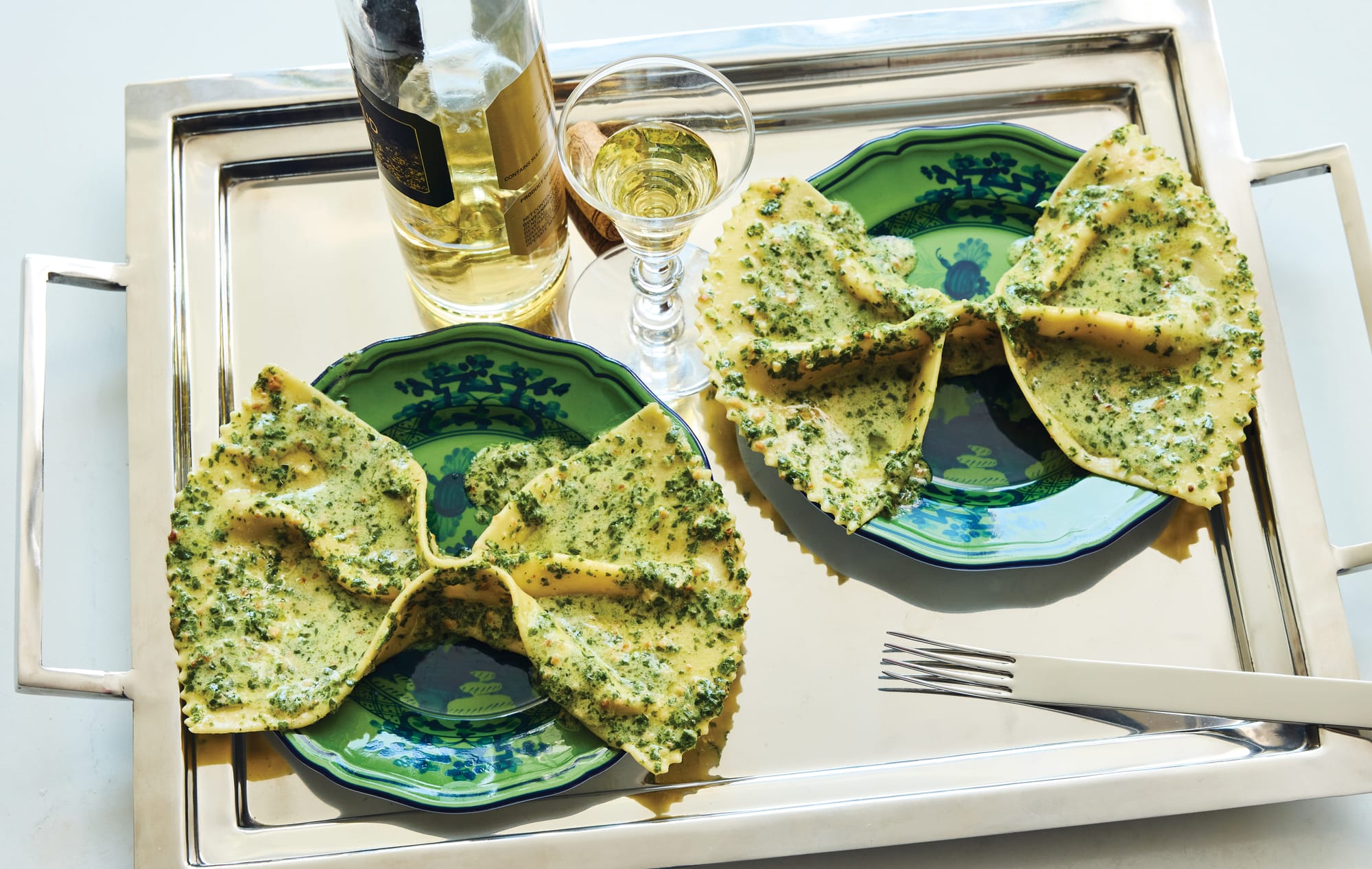
We’re thrilled to tease our next recipe, going live Thursday from the amazing Ella Quittner and her upcoming book Obsessed with the Best. As a treat, I feel obligated to share a picture of another recipe in her book, one that I have not been able to stop thinking about and that I will be making as soon as the book comes out. Two words: Big Bowtie. Enjoy. —C.G.W.
A Moveable Feast
We knew that the late Luciano Pavarotti, who grew up in Modena, loved his native cuisine with the passion of the Unknown Prince for the cold and riddling Turandot herself, but we were recently delighted to learn just what that meant for his culinary life on the road.
Nicoletta Mantovani, Pavarotti’s widow, told travel host Samantha Brown that the couple would take fifty pieces of luggage with them when touring, with twenty of the bags dedicated just to pots, pans, knives, and ingredients for the meals the great tenor would insist on cooking wherever he went. Bravissimo!
(And as an encore for the buffs: Puccini counted himself “un Maestro buongustaio” from Northern Italy, but in his student days wrote to his mother that he only needed some minestrone to keep him satisfied.) —S.D. (based on a tip from his dad Rex)
Archestratus, Adieu
Sad news to report from the world of physical books. Archestratus, the beloved Brooklyn-based cookbook store and cafe open since 2015, announced it was shutting down. The store is (soon was) one of the few remaining food-focused bookshops in the city, a place in which I could spend hours poring over the stacks. Not to mention, the food is great—once, before a friend’s book launch, I enjoyed two glasses of wine with an arancino and in my rosé-colored haze deemed it the best happy hour in Greenpoint.
Its closing announcement nods to a sad reality: “It is my feeling that these past few years have been deeply liminal,” owner Paige Lipari wrote in an Instagram post late last week. “The discontinuity between worlds is very real to me. We are in the middle of a large cultural shift, and, to bring it back to the material, there are things we do in the book and food business that make no sense in the world we live in today.” She went on to explain that, along with rising food costs and tariffs, cookbook sales are highly concentrated: “A statistic came out a few years ago that 89% of cookbook titles sell fewer than 100 copies. When I saw that, I said, ‘That’s correct. People are no longer buying books at our most popular events anymore. That is new. That is unsustainable.’”
The store will be open until April 26. I recommend going and buying every book you can if you happen to be in New York. As cookbook stores go, only Bonnie Slotnick, Joanne Hendricks, and Kitchen Arts & Letters remain, which I suspect are more labors of love than cash cows.
There’s something to be written about the Sad State of Cookbook Affairs (if you have thoughts, email me!). Until then, let’s pour one out for Archestratus and eat one more arancino while we still can. —C.G.W.

Food is Cheap, Hurrah!
By Sam Dean
A new book argues industrial food production is a triumph (except for all the bad stuff)
Food should be widely available, easy to get, and practically free.
Isn’t that the point of this whole civilization thing? What’s the use of AI data centers, or fine dining, or democracy, if someone is going hungry when there’s enough to go around?
Generations of food writers, when touching on the farm economy, have bent the genre away from these self-evident truths. Wendell Berry, dedicated to yeoman farming in an 18th-century mold, railed against big farms and big cities alike. Alice Waters seemingly mistook her exquisite and expensive restaurant for a model that could scale beyond Berkeley. Michael Pollan, after examining Big Ag with both horror and awe in The Omnivore’s Dilemma, landed on a cantankerous small farmer in Virginia for the moral of his story.
I get it. There is no narrative charisma to a factory farm, no charming underdog growing organic local vegetables to profile and quote. Every locavore menu rests on a base of industrial food (it’s hard to get flour, oil, sugar, and countless other staples any other way), while the mind’s eye wants to focus on the beautiful cheese aged just up the road, or the carrots just scrubbed of proximate dirt.
But Feed the People!, a book published last week, makes the case for pitching those tendencies onto the compost heap.
The book’s two authors, Jan Dutkiewicz (a political economist at Pratt) and Gabriel N. Rosenberg (a historian at Duke), lay out a clear case for why the bespoke small-farm mythos trotted out by food people—and the paleo-keto-raw anti-science cant now favored by the MAHA movement—is a dead end. The facts, and the numbers, simply do not add up. Our industrial, synthetically fertilized, GMO-seeded, machine-powered, computer-optimized agricultural system isn’t a cartoon villain, but one of the crowning achievements of human history.