

Good Hospitality Is the Real Seasoning
Welcome to our Thursday edition, where we feature a great new recipe. Tuesday is for features.
IN THIS ISSUE: Contributor Adam Robb unearths the culinary connections in the new Epstein files, and Sue Li shares her recipe for Palestinian cabbage rolls (with a bonus cabbage micro-recipe hiding in her author bio)
Appetizers
Chef D’Obscène
Jeffrey Epstein’s connections to the food world have made headlines in the past: Nathan Myhrvold, the former Microsoft CTO, wildlife photographer, and author of all 46 pounds of the five-volume Modernist Cuisine cookbook, appears to have been close friends with the investor and convicted sex offender, to the point of contributing six pages of graphic African safari snapshots to Epstein’s 2003 birthday book (published by the House Oversight Committee last fall).
But the latest tranche of files, released by the Department of Justice last week, only reveal deeper—and stranger—details of Epstein’s culinary life.
In the years following Epstein’s conviction for solicitation of prostitution from a minor and 13-month stint in prison, Myhrvold was eager to ensure that Epstein’s many residences were stocked with copies of Modernist Cuisine and Modernist Cuisine at Home, in both English and French, according to a number of emails between their teams of assistants.
Myrhvold also kept Epstein up to date on his progress on Modernist Bread, bragging it would be the “most expensive non-fiction book in the history of mankind” and sending unpublished recipes to Epstein under the guise of “recipe testing.”
But despite his connections to gourmands like Myhrvold and Tim and Nina Zagat, the emails show that Epstein had no taste. His diet toggled between sous vide steaks and stale beef jerky, Lactaid chocolate milk and blueberry muffins paired with I Can’t Believe It’s Not Butter! spray (later replaced by Kerrygold). His immature palate was no secret among his circle—after a night out in 2010, Katie Couric wrote to Epstein: “I know you're not a foodie but that lasagna was ROCKIN!”
Still, Epstein’s dinner guests had to eat. In 2011, Epstein set out to find a full-time private chef with the help of Steve Hanson, the man behind New York’s B.R. Guest restaurant empire. Hanson eventually turned up a chef: Francis Derby.
Derby has a long resumé in top-tier kitchens. Today, he serves as executive chef and culinary director of The Halyard in Greenport, New York. He previously operated four outposts of The Cannibal restaurant, in both New York and Los Angeles, and spent his early career working his way through downtown hotspots like wd~50, Gilt, Tailor, and Momofuku Ssam Bar. (Derby did not respond to multiple requests for comment for this story.)
Epstein made Derby audition for months, the emails show, making him prepare dinners at his homes in New York, New Mexico, Palm Beach, and on his private Caribbean island, Little Saint James. But by the time Epstein was ready to hire, Derby was preparing to open his first restaurant, King (no relation to Clare de Boer’s current restaurant of the same name), and couldn’t take the job.
That separation didn’t last long. Derby walked out of King’s kitchen after only three months, telling former New York Magazine restaurant critic Gael Greene at the time: “I never got the support I needed for the kind of food I do.” Soon after, he picked things back up with Epstein and began work as his private chef. —by Adam Robb
Stay tuned for Part II, where we discover whether Derby found the support he was looking for, examine the recipe for Epstein’s beloved jerky, and see how pressure from Woody Allen’s wife Soon-Yi Previn might have precipitated Derby’s departure.

Good Hospitality Is the Real Seasoning
By Sue Li
A memory of malfouf
In 2019, my husband and I traveled to Jordan. Before heading to Petra and Wadi Rum, we spent a night in Amman to have dinner with one of my husband’s work colleagues. It felt high-stakes: This was a new professional relationship, and we were being invited into his home for the first time. The house was beautiful, with very shiny marble floors and artwork displayed in the most elegant way.
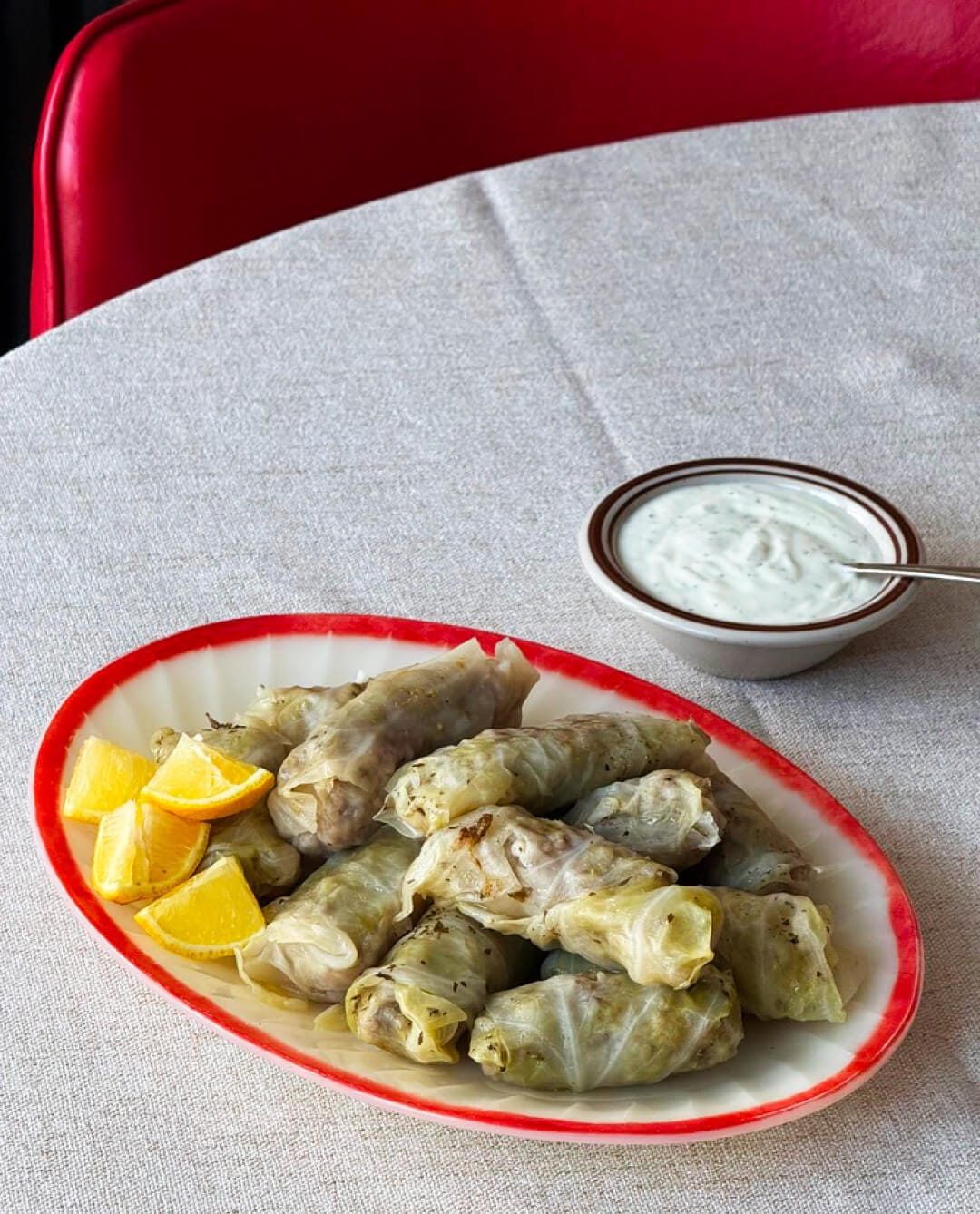
I remember feeling almost full from nerves before we even sat down; I was sweating at this point. We gathered around the table, and the family’s chef came out with two large platters of malfouf—Palestinian cabbage rolls. Seeing the malfouf relieved so much of the anxiety. It felt incredibly relaxing to come into this immaculate home and then be served such generous, comforting food. One version was filled with lamb, beef, and rice; the other was vegetarian, with fennel, tomatoes, and rice. Each roll was small and delicate, perfectly tender, deeply flavorful.
Our host, Omar, told us the dish was his grandmother’s recipe. It was the version she remembered from her life in Palestine before the Nakba in 1948. She and her family fled from Palestine to Egypt, then to Lebanon, and finally settled in Jordan. Throughout this thirty-plus-year journey, she kept cooking recipes from her homeland; these were some of her dearest memories of her life in Palestine. The family’s chef joined the household in 1986, and Omar’s grandmother taught him all of their family’s recipes, one by one. She has since passed away, and the chef has written down all of her recipes and keeps them in a binder.