
The Ruth Interview
Welcome to Gourmet magazine, an independently owned digital food magazine that’s not affiliated with the Gourmet magazines of yore. Our Tuesday editions are where we feature great writing about food. Thursday is for recipes.
IN THIS ISSUE: More cookbook stuff (museum edition), even more cookbook stuff (bookstore edition le troisième), and some deep thoughts from Ruth Reichl herself, unpaywalled for all readers.
Appetizers
Rad Recipes
Did you ever wish you could wander through a collection of 4,300 community cookbooks from the past two centuries? Our Boston-area readers can go check out a selection from this culinary zine stash at a new exhibit at the Radcliffe Institute for Advanced Study called Cooking Up Change: Women’s Agency and Community Building Through Cookbooks. We just missed the opening talk, and the curator’s tour in March is already sold out, but there are still spots open for April and May. —S.D.
A-Bridged To Cookbook-Ithia
This will be my third little piece about cookbook commerce—and I won’t stop until the subject is truly exhausted! Allow me to catch you up. In my first dispatch, I mourned the impending closure of Brooklyn-based shop Archestratus. In the following issue, I listed a couple more cookbook-focused stores in the Big Apple, and then asked our wonderful readership for their own recommendations from around the world. And you all delivered! Here’s a (non-exhaustive) list via the Friends of Gourmet (FrOGs) in my inbox:
- Annette from Washington, D.C. highlighted Bold Fork Books, which she described as “a sweet little cookbook store in Mount Pleasant.”
- Jacob from Boston mentioned Over The Tunnel Books in the East Boston Oyster & Co grocery store, located in, you guessed it, East Boston. He said he mostly knows about them because of their pop-up bingo and caviar nights, which I am all in for!
- Reader Phoebe wrote in about Vivienne in Portland, Oregon: “a wonderful cookbook store!”
- And Mike chimed in about Books For Cooks in Melbourne, Australia. We’ve made it halfway across the globe, folks! “OK, it's a bit of a hike from Manhattan, but it's a must-stop for any Gourmet reader who ends up in that bookstore-obsessed city,” Mike writes.
—C.G.W.

The Ruth Interview
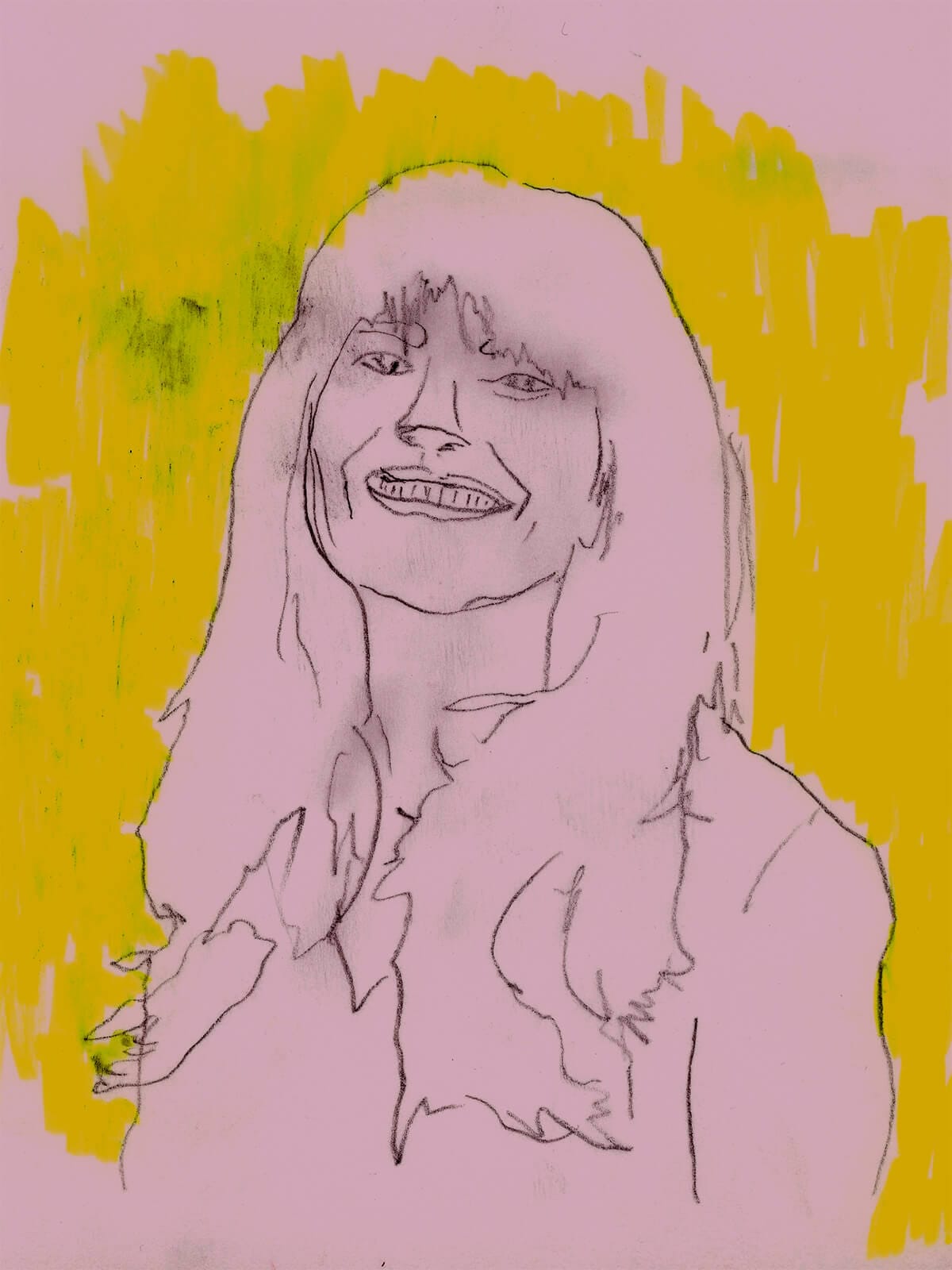
By Amiel Stanek
Ruth Reichl has some feedback.
If you don’t know who Ruth Reichl is… well, honestly it is kind of impressive that you found your way here in the first place. She’s been a food world luminary since before any of us worker-owners were born; these days, she writes La Briffe over on Substack. We had a delightful Zoom with her a few weeks back, and gabbed about all things food, and media, and food media. This interview has been edited for length and clarity. (Sorry we didn’t make it shorter, Ruth. We’re working on it!)
Gourmet: So Ruth, you used to be the editor in chief of a different magazine called Gourmet, one that its parent company, Condé Nast, shuttered in 2009, and is in no way connected or affiliated with our Gourmet. Am I correct there?
Ruth Reichl: You are totally correct there. If only you had the money that I had.
G: So we are moving on with the mutual understanding that there are two entirely different Gourmets in the room, the one that used to be owned by Condé and the new one that I am a worker-owner of, which is using the name Gourmet now, which has nothing to do with Condé Nast. Let’s get into it.
RR: Great.
G: I think it’s fascinating that Condé Nast shuttered Gourmet in 2009, right at the beginning of this massive explosion of interest in food.
RR: I mean they did have two epicurean magazines in a time when advertising revenue for every magazine in America had dramatically fallen.
In the past, whenever a magazine S.I. [Newhouse, former publisher of Condé Nast] loved wasn’t doing well, he just wrote a check. But this time, they just didn’t have the money to do it. One of them had to go. I think they closed the wrong magazine, but I’m told that when they did the accounting, both magazines were losing money, but Bon Appétit’s path to profitability was two years earlier than ours.
G: Right.
RR: It is still kind of incomprehensible to me. We were at a point that I had been fighting for my whole career, where food was finally being taken seriously. We had moved the magazine beyond recipes and restaurant recommendations and where to go on your very expensive travel to actually tackling real issues about food as well. Then they chose to go with a magazine that was basically focused on recipes.
It seems so stupid to me, for them not to have seen where food was going, and that there was a whole generation—your generation—of people who cared about the food, what was happening to farms, what was happening to the environment.
And they also didn’t see that the thing Bon Appétit did well, the recipe thing, was going to move to the internet. That made perfect internet sense, right?
G: It’s so interesting that you say that—I mean, I use recipes on the internet and I think that recipes on the internet make sense, but it also feels like recipes are almost the last remaining thing that people still care about seeing in print. Cookbooks still sell.
RR: I think that people use those two mediums in very different ways. We know that people read cookbooks in bed, they use them for inspiration, they don’t just use them for recipes. In many ways they’re dreamscapes, right? How could I make the most wonderful Christmas dinner of my life? But if you go to the farmers’ market and you come home with a pumpkin, you’re very likely to go on the internet and look up a pumpkin recipe.
G: Yeah, the way I’ve always thought about print media is that it’s giving you something that you didn’t know you wanted, right?
RR: It is giving you the inspiration, it is the reason to go buy the pumpkin, whereas people are going to the internet for what they already need or want.
G: That’s one of the reasons we’re calling ourselves a magazine, we want to give people a little bit of what they didn’t know they already wanted.
RR: It’s interesting you say that, because one of the things that I was always really resistant to is the idea of focus groups. I think magazines are killing themselves with focus groups, because focus groups basically say “What is it that you want from this magazine?” And then they provide that.
My idea was that a great magazine, every time you pick it up, you end up finding out something that never occurred to you that you wanted to think about.
G: Another reason that we call ourselves a magazine is that media has become really personal brand-driven. It’s gone from cadres of smart people working together to refine each other’s ideas, where the result is greater than what any one person would be able to produce on their own, to a landscape where everybody is an independent creator. Is that good for food culture?
RR: I think that the greatest thing about magazines is that they’re collaborative. The great joy of running Gourmet for me was watching an issue develop. I would leave every meeting thinking, I wonder what we’re going to end up with, because it grew and changed.
We did everything pretty much by committee, we had these meetings and someone would say “That’s a really stupid idea,” and you go, “Oh, oh maybe you’re right, maybe that is a really stupid idea.” Now when I’m putting out my own Substack, I wish there was someone there who would say to me, “Boy, that’s a stupid idea. Don’t put that in.”
G: That’s funny, I think people have an idea that as the editor in chief of a magazine that you are the magazine.
RR: I mean there are different kinds of editors, and I do come out of this like Berkeley hippie background. It was always more important for everyone to feel like they had an investment in the magazine than for it to be totally my vision.
I ran a lot of pieces that I didn’t like that much because an editor would say, “This is really important to me” and really go to the mats for it. OK, if you can make a good enough argument for it. It’s kind of like why I write fiction: I want to find out what’s going to happen and I don’t know.
G: Did your readers change with the magazine, too? In the late aughts, food was just starting to really go from this thing that was—I don’t want to say a niche concern, but it became mainstream.
RR: Oh my God, that changed so much. When I started my career, there was a tiny little group of us who cared about food. And the people who went to restaurants were basically rich white people.
Back then chefs were mostly old European guys who were mostly not very well educated, since they started working in kitchens when they were thirteen. I sold my first big magazine article, about the opening of Michael’s, because I said to my editors: this restaurant is going to open in Los Angeles where all the chefs are American, they’re all college educated, they’re all under 25. And that was enough. The idea of college-educated American guys wanting to be chefs, that was so radical in 1978. I mean it was unheard of. And then they’re going to use American products, even more so.
There have been a few major changes in American food. The first one is in the ’60s when travel became affordable. The price of airline tickets goes down and suddenly middle-class people are traveling and they go to Europe and they discover that there are all these amazing products and the food is incredible. It changed what we ate in this country.
Then during the ’80s you suddenly have really the first generation of American chefs: young, smart educated, articulate American chefs.
And then the Food Network started in 1993 and changed food in America in really important ways. Children started watching food TV. Chefs became nationally known. Children who mostly didn’t see their parents cooking, since their moms were working, they’re sitting in front of the TV watching Molto Mario.
G: I remember watching Emeril when I was a kid, some of those lines are still stuck in my head—seasoning the water for boiling, “it’s not going to come out of the tap seasoned!”
RR: Yeah, it made you interested in food in a way that previous generations hadn’t been. You thought food was interesting, it was cool, and then going to restaurants—I mean, when I was young and poor, we didn’t go to restaurants. It didn’t occur to us to go to restaurants. My son is young and poor, and he wouldn’t think of not going to restaurants. If you go to the movies, and you buy books, and you go to museums, you go to restaurants. I mean, maybe you don’t go to expensive restaurants, but it is part of culture.
If you’re a smart and compassionate person and you’re interested in food, you start being interested in where it came from. You start asking bigger questions. Who grew this food? You start thinking about who the workers in the restaurants are. You start wondering if they’re getting paid. You start thinking about what kind of soil your food was grown in.
And to get back to your original question, to me it was kind of tragic that you lose this magazine which is addressing all of these issues and trying to be more than just recipes.
G: How did you see the landscape change after Gourmet shut down?
RR: I saw the birth of other really fantastic food publications. Lucky Peach comes along, and I was so jealous of what they were able to put on their covers. And then in response to the bro-ism of Lucky Peach, you get Cherry Bombe, and you see small literary publications like Bitter Southerner doing wonderful food coverage. So you get smaller publications but great publications, and you also get the recognition from other publications that they should take some of those writers and start covering food.
So you see David Remnick [editor in chief of the New Yorker], suddenly they’re doing a lot more food in the New Yorker. You see newspapers suddenly expanding the kind of food coverage that they do.
In many ways that made me sad. The New Yorker does wonderful food coverage, but they’re not speaking directly to cooks. And I mean one of the ways that I ultimately persuaded David Foster Wallace not to pull his “Consider the Lobster” piece, when we were having fights about what could and could not go into it, I said, “Anyone will publish this. It’s great. The New Yorker will publish it. The Atlantic will publish it. But you really want the people who are cooking the lobsters to read it.” And he said, “You’re right.”
G: Yeah, I think that that is the true promise of the magazine, that you came for one thing and you got something else that you weren’t expecting. What do you wish people were doing now?
RR: One of the big holes is that I think there’s still an audience for a magazine that has the resources to cover food in all its complexities.
It would be great to—take your minestrone recipe. Do exactly what you’ve done and then have something alongside that dealt with every ingredient, and what was happening with those ingredients. What it meant if you bought a turnip at the farmers’ market, and who that farmer was, and how different it would be if you bought an industrial turnip.
G: Do you think that would change how people cooked?
RR: I think it would. That’s what we’re missing now—we’re getting a lot of great recipes, we’re getting a lot of great articles about everything that has to do with the food environment, certainly more than we ever had before. I mean twenty years ago, nobody in America knew about confinement animal facilities. Now, no thinking person doesn’t know about them. But nobody’s getting the big picture, and it’s such a lost opportunity. It makes me crazy.
G: I want to do a little thought experiment. Let’s say Condé never closed Gourmet in 2009, and you were still at the helm. What do you think the magazine would look like, and how would your approach be different now than it was back then?
RR: We would certainly have more diverse voices now. One of the things that’s been amazing in the last ten years is that the people who are writing recipes are writing it from a different place. We’re not going out and discovering—Oh I’ve just found the food of Senegal. Oh I’ve just found the food of Laos. You have people for whom this is what they ate growing up, and who are writing about their own food.
Another thing, it shocks me that in a time when everybody has become a photographer, when everybody has an iPhone, that the print publications haven’t used professional photographers in more interesting ways.
G: I watched that shift at Bon Appétit when I was there. So much of the focus of the magazine was trying to find photographers who didn’t necessarily shoot food or were coming from different places, and seeing how they wanted to shoot a roast chicken, really thinking about food photography as art.
And at a certain point at the end of the 2010s the prevailing wisdom became that all of these images need to work for the website, and we need a straightforward picture of the dish that somebody’s going to eat, otherwise everybody’s going to scroll past it.
RR: We tried hard at Gourmet. I always thought of those centerfolds as porn, basically, but we also did some stuff like shooting a dinner party in real time. It is so antithetical to how food is shot, and it’s so scary because you lose light. We shot a couple where it really was kind of a disaster, because it started late, but it was worth it because what you get is so different than when you’re setting everything up, you know? I mean, R.W. Apple’s birthday party at L’Ami Louis in Paris, we hired a news photographer to do it and it doesn’t look like anything you’ve ever seen before. It’s just an amazingly different look.
Some of my favorite pieces were when I would say, “You know, look, I want to look at seventeenth-century Dutch paintings,” and some of those pieces are beautiful. The late Rómulo Yanes, who was for many years the Gourmet photographer, I mean nobody ever romanced food the way Rómulo did.
The other thing I would really lean into is long-form journalism. In a time when there’s not enough investigative reporting because it’s expensive, time-consuming, and there are not a lot of people who do it well, I would certainly be looking for investigative reporters to cover real issues in the food world.
I’m thinking of Jocelyn Zuckerman, who was our articles editor, and actually the person who got us David Foster Wallace and a lot of the other great writers to work for us. Just a few months ago, she did a piece in the Guardian about how more people buy their food from dollar stores than from Costco and Walmart combined. I mean, that’s an important piece. I would lean into stuff like that.
I would also be looking for people who just write fun pieces. That’s the other thing, a lot of the fun of it has been lost.
G: It sounds like what you’re describing is the mythical mix, and that’s the fun of putting a magazine together. But for that to all be within one ecosystem is really really hard for media organizations to do now because people are like, I want one thing. Recipes, or investigations, and not seeing the connective tissue between them.
RR: Yeah, exactly. It breaks my heart.
G: I have one more thought experiment. Let’s say you’re running a new food magazine called Gourmet that has no relation at all to the old one that Condé Nast shuttered in 2009, and you have a smaller budget by a factor of—I don’t know, what do you think it cost to make an issue of Gourmet in 2009?
RR: Probably about $100,000.
G: So, I’m not good at math, but let’s say you had $5,000 to put out an issue of Gourmet. What would you spend it on?
RR: Well, I mean, first of all, $5,000 not counting salaries?
G: Right, yeah. No salaries. And let’s not assume it’s a print product.
RR: Well, I would definitely try and find a young writer who was really interested in doing investigative stuff and give them the time and the resources to go and work on one of the 8,000 things that I think need to be investigated at this moment. I would try really hard to break some news.
And since we’re not talking about a print product, I’m probably not spending my money on visuals. You can do perfectly good visual stuff with an iPhone online. And you can’t beat the moving image, I would try and start a video series with someone who was really personable.
One of the things I wanted to do at Gourmet was something that I was calling “soup opera,” which would be about what happened between the eight test cooks in the kitchen, which was hilarious all the time.
G: That “soup opera” idea is so funny. I feel like that was very much what Bon Appétit was doing right up until the wheels came off in 2020. People loved seeing cooks not just looking at the camera and cooking, but also interacting with each other and sharing ideas.
My dream is to figure out a way where we can find three or four cooks who want to collaborate with each other, to get into a meeting and talk about ideas, test each other’s recipes, refine them, but in a way that gives people a taste of what it’s like when you’re trying to figure out the best and most approachable way to develop a recipe, weighing the pros and cons of this specialty ingredient or this grocery store ingredient.
RR: Yes, absolutely.
G: OK, one last question. How are we doing so far? Be honest. I’m not looking for a pat on the back.
RR: OK, I mean I really liked today’s. I loved the Sietsemas thing. I mean Alan [Sytsma], he wrote some of my favorite pieces for Gourmet, he was not just an assistant. He wrote this really moving piece about a halal butcher right after 9/11 that was wonderful.
I think the writing could be tighter. I felt like that the piece on Tuesday went on, like I just kept thinking, someone should have taken a pencil to this. But it’s early days.
G: All right, I’ll take it. When I filed my own piece for the Big Soup recipe, I said to myself, this is the last time—do not let me write anything that’s more than 700 words. It’s too long for something about a recipe. I think we can get there.
RR: I think you can too. I just don’t think you’re there yet.
G: It’s funny coming from print magazines, where we would spend four months working on a 300-word piece with a great photo. It’s very humbling to be working in this medium and publishing things much more quickly.
RR: Well, I can tell you that when I was trying to decide whether I was going to make the move from magazines to the LA Times, Mary Francis Fisher said to me, “You need to do it. You’re polishing every word. You need to go to a place where an editor says to you, ‘I need 10 inches and I need it in an hour.’ And you give them the 10 inches and you know it’s not what it should be, but it’s going to be lining someone’s birdcage tomorrow.” It was great advice, I needed that discipline.
G: The problem with a digital newsletter is you can’t even line your birdcage with it.
RR: Believe me, I know, I send out mine every week and go, “Oh, God.”
NEXT ISSUE: Parlez-vous crème anglaise?