

Tacos de Chicharrón en Salsa Roja
Welcome to Gourmet magazine, an independently owned digital food magazine that’s not affiliated with the Gourmet magazines of yore. Our Thursday editions are where we feature a great new recipe. Tuesday is for features.
IN THIS ISSUE: Oh no! Is Flavortown the capital of the Manosphere? Plus, the erroneous gastrohistory of steak tartare.
Appetizers
Guy’s Gross-ery Games?
The Food Network’s most frosted found himself at the center of controversy on Saturday. He was spotted ringside at a UFC match in Miami, dapping up Manosphere Scumbag in Chief Andrew Tate. Guy has vehemently denied even knowing who the Tate brothers are—but, in the video posted online, it’s odd that he seems not to know the other men in the same row, whom he greets only with perfunctory handshakes. A few of us count ourselves Triple D lovers ad infinitum: do us a favortown, and pray the denial turns out to be true. —A.T.
Mistake Tartare
A thing Gourmet editors sometimes do is wake up missing fair Italia. Days of hopping from bacaro to bacaro in La Serenissima or eating carciofo all giudia in Roma will do that to a person. On such a morning (yesterday), I cracked open Waverly Root’s classic The Food of Italy, where I encountered the shocking gastronomical origins of steak tartare, a dish that is not even Italian:
The Huns raided but did not stay, and even if they had, it is unlikely that Italian cooking would have gained. They showed little interest in eating, though they did in drinking, indulging immoderately in fermented milk or yoghurt, and in cam, which was fermented barley. Their chief contribution to gastronomy was raw meat, which they tenderized by placing it under their saddles and riding around on it all day—hence today’s term, “Tartar steak.”
After excitedly texting this tidbit to my Gourmrades, I grew suspicious. The information superhighway confirmed my suspicion that Signore Root was only repeating a rumor many in the nineteenth century had come to believe. Early European travel writers propped up this fiction to racistly malign the Mongols, who used horsemeat—long believed to have salutary qualities—to soothe sores their horses developed because of saddles. The proprietors of this story had likely never met a Tatar (another spelling of Tartar). Steak tartare is etymologically a combination of two separate but related dishes: beefsteak à l'Americaine—raw ground steak topped with a raw egg and accompanied by capers, parsley, and onion—and beefsteak à la Tartare—raw ground steak with a side of tartar sauce. —A.T.

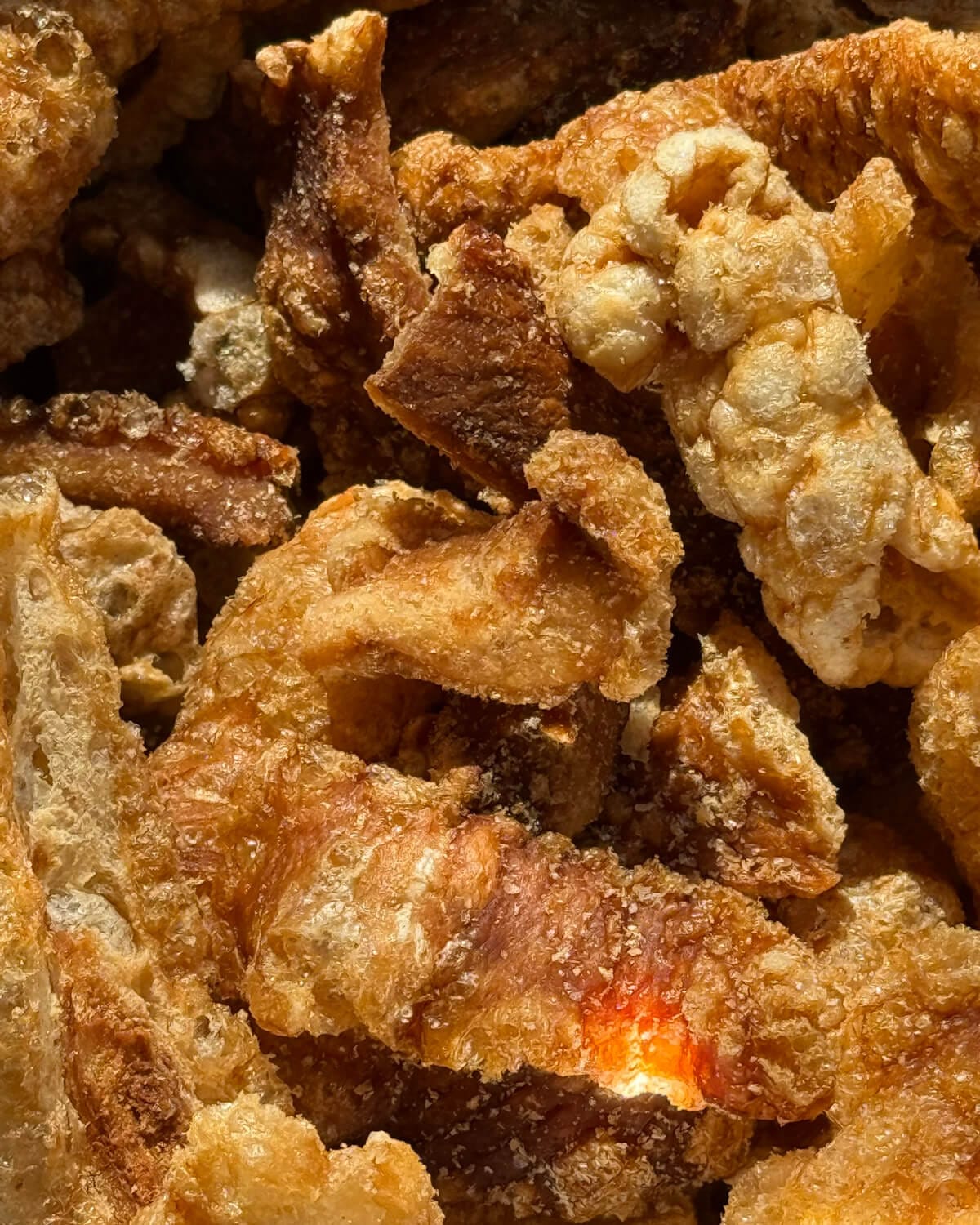
Tacos de Chicharrón en Salsa Roja
By Amiel Stanek
A salsa journey for some psychedelic tacos de chicharrón, from the crew behind the excellent new antojitos cookbook Vitamina T
Jorge Gaviria wrote the book on masa. Channeling the same obsessive fascination with heirloom corn that led him to found the online Mexican grocery Masienda in 2014, Masa is the quintessential modern reference text on the subject. Gaviria lays out in painstaking detail how to take kernels of dried corn all the way through nixtamalization, grinding, mixing, and shaping to produce truly homemade tortillas, tamales, and all manner of masa products. Masa is to the tortilla what Tartine Bread is to sourdough: comprehensive, unsparing, a text for the kinds of cooks for whom good is never good enough.
Now, four years later, he’s teamed up with Fermìn Núñez, the chef of Suerte and Este in Austin, TX to create Vitamina T, a cookbook celebrating the unbridled joy of Mexico’s most beloved street foods. Tostadas. Tortas. Tacos. Tamales. The reason for the season, the motivation for the masa. The book is just as thorough as Gaviria’s first but has the raucous, free-wheeling energy of a road trip buddy comedy.