Eating Oblivion
Welcome to [Untitled Food Magazine], an independently owned digital food magazine. Our Tuesday editions are where we feature great writing about food. Thursday is for recipes.
IN THIS ISSUE: An epic Hudson Valley cookbook sale and a perfect lunch when we needed it most.
Appetizers
(There’ll Be) Books in the Valley (For You)
Thanks to all who showed up to our Pride party last weekend—’twas a blast! Another Hudson Valley happening soon: The inimitable Mona Talbott (co-proprietor of Talbott & Arding, Hudson’s premier specialty food store, and founding chef of the Rome Sustainable Food Project, among other things) is helping to organize an enormous cookbook sale this coming Saturday and Sunday at the Churchtown Firehouse (2219 County Route 27, Hudson, N.Y.), with all proceeds benefitting the Claverack Free Library. We’re talking 2,000 new and used cookbooks, including first editions, signed copies, and tons of early printings from the likes of James Beard, Jacques Pepin, Julia Child, and Craig Claiborne, along with oodles of oddball gems. I myself am particularly excited to peruse the thirty-odd boxes from the Millbrook estate of the late Teri Towe, a renowned Bach scholar, musicologist, and radio host who apparently had a real yen for celebrity cookbooks and midcentury food ephemera. Talbott & Arding will be selling hot dogs and grilled cheeses on Saturday, and on Sunday there will be wood-fired pizzas by Romanaccio and ice cream from Fortune’s. See you there? —Amiel
Pollo Al Jerez, Niles?
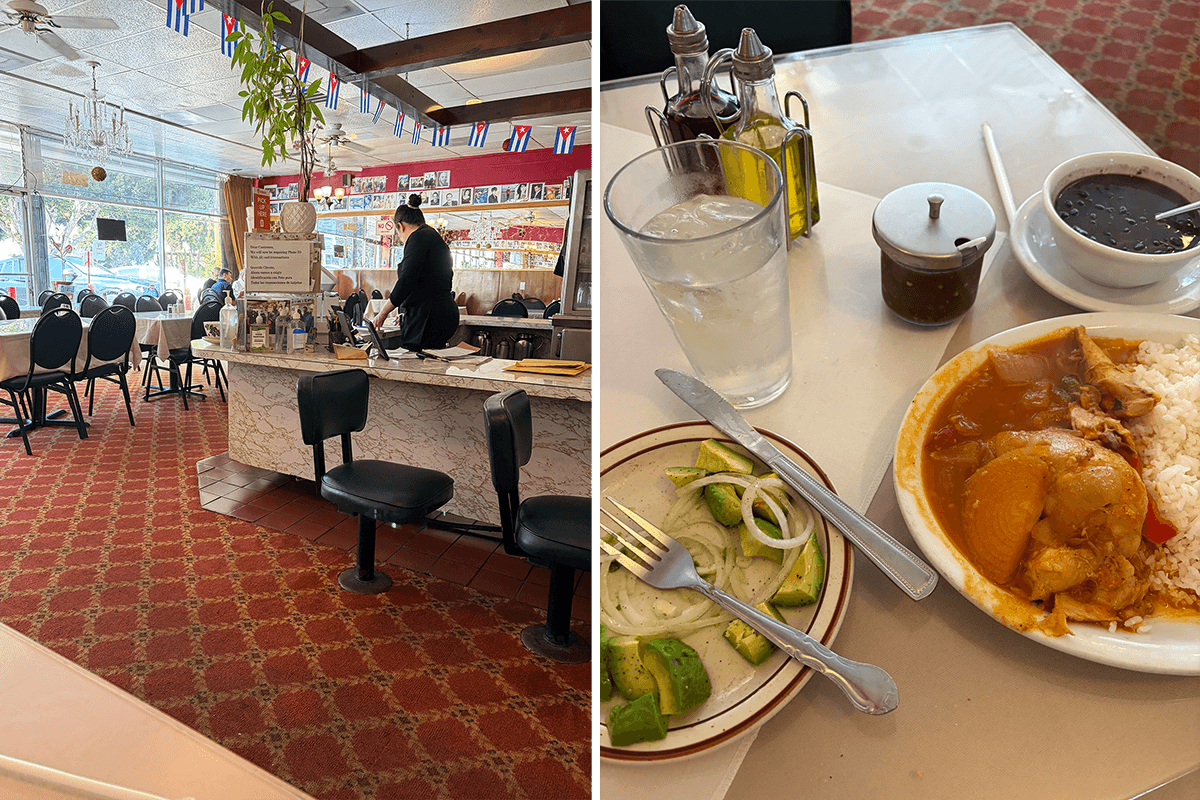
As you’ve probably noticed, we don’t really do restaurant reviews here at [Untitled Food Magazine]; consider what follows to be more advice than assessment. I was driving down Pico Boulevard in Los Angeles the other day, fresh off a load of errands, mutual aid grocery deliveries, and exercise. It was about 3 p.m., and I hadn’t eaten all day. I was beginning to enter the panicky stage of hungry exhaustion that only arrives after handling a lot of food but not consuming it. I pulled over in the heart of Pico-Union at the sight of a gorgeous old restaurant sign: “EL COLMAO” shined down at me in ornate Spanish colonial lettering. I had no idea what it was but, as they say, el diseño gráfico es mi pasión. I stumbled in, operating on fumes, and was led by a friendly man to a table in an otherwise quite empty Cuban restaurant. A menu arrived swiftly. A large glass of water. A warm roll. I looked up after ordering a plate of pollo al jerez and realized I was sitting in one of the most beautiful dining rooms I’d ever seen. Plump banquet hall chairs on deep red, filigreed carpets Of a Certain Age. Mirrors laced with gold-painted verre églomisé. Hanging plants canopying Formica diner counters lined with swivel stools. A large family held down the only other occupied tables, way in the front of the restaurant, occasionally craning to see the World Cup game on the T.V.
El Colmao, it turns out, is a Los Angeles Cuban institution, beloved by the late Jonathan Gold, impeached Secretary of Homeland Security Alejandro Mayorkas, and decades of Angelenos since they opened in 1969. Now it has an air of frayed dignity, the comfortable staleness of the sorts of disappearing continental dining establishments that I love to languish inside. It would have been easy to hear my dining companions, had I any; in this moment, alone, it was enough to hear myself think. The experience lifted me out of my torpor, and instead of picking up my phone idly or frantically scanning my calendar, I sat and ate with a monastic gratitude that would’ve made Thich Nhat Hanh proud. This is all to say: Pull over. Take yourself somewhere new for lunch. The rest will be there when you’re done. —Alex

Eating Oblivion
By Marian Bull
What happens when eating isn’t about sustenance but… something else?
1.
Today, in a factory somewhere in America, an eco-friendly packing peanut is being stripped of its nutrients. I do not know if this happens once the peanuts have already been puffed into the shape of a baked Cheeto, or when they are still in the primordial starch phase, but I know that when they fill a large clear plastic bag tall enough to reach my sternum, they no longer contain the “edible components” like sugars that make them appealing to rodents and bugs. They still appeal, though. They appeal to me.
I began buying these large bags of eco-peanuts in 2018, when I started selling ceramics on Instagram. I bought my peanuts from a family-owned company in Queens: this was, I believed, the most virtuous choice I could make, far better than bubble wrap (chaotic evil) or styrofoam peanuts (lawful evil). They arrived in three-pound bags the size of triple-wide body pillows. Since the peanuts I bought were made from cornstarch, they could easily dissolve in water, though I’d later learn that they retained the power to clog a sink, so these days I leave the degradation to the landfill ecosystem. My peanut bags lived in the small office off of my bedroom, and once or twice were discovered by mice. I could hear them chomping from my bed, where I lay terrified that, thanks to a particularly gluttonous mouse, I’d find the bag empty the next morning. Instead I found a small hole the size of a large popcorn kernel. I figured the mouse had gotten through two to three peanuts before getting full. I couldn’t blame him.
The peanuts themselves were shaped like fat bent fingers, somewhere between Pirate’s Booty and a Cheeto Puff. When I had to ship a few or a few dozen packages, I would build my boxes, then pour in a layer of peanuts, either by upending the whole bag (messy, required a vacuum to clean up) or by using a plastic quart container to decant them (precise; too slow). Either way, the smell of cornstarch would fill the air, as if someone had delivered a large bag of cheese puffs from the bodega but forgotten the savory coating. The smell activated some hidden receptor in my brain that always responded with desire. It was not so much a hunger or a craving, but a tingling curiosity on the back of my tongue. This was not food, I knew; the peanut existed to protect my work from shattering and becoming worthless. The peanut was insurance. But I knew it was technically edible. This possibility—the knowledge that I could eat it without disgust and digest it without incident—hung around each new bag of peanuts like an aura. I’d open a fresh shipment and that factory-fresh starchy aroma would fill my small office, tempting me towards a very bland taboo. When I told a friend I was writing this, they said I had to try one for the bit, but I’m sure that would ruin the spell. I’d rather they hover in my imaginative appetite like the forbidden fruit of our hyperprocessed age.
I know that there is a DSM diagnosis for people who chow down on non-food items. I first learned about pica when my favorite podcast discussed an influencer who posted about her cornstarch cravings. But I’ve never eaten dirt, or clay, or laundry starch; I am a mere interloper in the world of nonnutritive lust. I am the fake bisexual to a pica-haver’s Kinsey four. But a handful of non-foods items have entranced me since childhood, seduced by their hint of oblivion. I don’t want to take a shot or pill that kills my appetite; I don’t want to stick a vacuum inside my body to suck out fat; I don’t want to place a boiled chicken breast into my Vitamix and blend it with yogurt and banana (though I’ve considered it). I want to fill my mouth with something empty and everlasting, and know what it tastes like.
2.
In 1998 I was in fifth grade, pubescent and staring down the barrel of girlhood while dreaming of Britney Spears’s abs in the “…Baby One More Time” video. Kate Moss’s hipbones and the lanky limbs that scattered themselves across the dELiA*s catalog had simmered into the soup of my subconscious since my older sibling brought their first magazine home. I was a white, upper-middle-class girl living in ’90s suburbia; anorexia simply appeared to me like the sky through parting clouds. The message boards found me, more than the other way around.
Most of the posts on pro-ana boards—“pro-anorexia” forums that often encourage or sanitize anorexic behavior—were mundane: girls not eating, then bragging about how little they ate. This is the first memory I have of scrolling. Girls upon girls, each anonymous and desperate to be the smallest. Many took classic teen magazine advice and stretched it into something sharp, like incarcerated people turning toothbrushes into blades. I can’t bring myself to describe what they tried to teach me here; I worry that I might replicate the intoxicating effect they once offered me. Imagine watching the X Games. Imagine listening to a true crime podcast. It’s all the same sweet voyeurism of extremity; the only barrier to entry is willpower. But there was always one practice that these girls evangelized that seemed the strangest, and therefore the most beautiful, to me: If you’re so hungry that you must consume something, they said, just eat some toilet paper.
The T.P. snack was illicit, as naughty as using that same roll to defame a neighbor’s house, but rendered more obscene by its secrecy. It was against the rules, and like so many forbidden acts, it was a reworking of categories that adults consider firm. It was an innovation of desire.
How many calories live inside a square of toilet paper? It doesn’t matter, I’ve learned: the body does not digest it. It moves like food—chewed, swallowed, excreted—but our bodies do not absorb it like food, and the disappearing girls knew this. I didn’t realize that the appeal of toilet paper was that it didn’t “count” and was therefore a nutritional placebo. I thought it existed in some strange third category—that maybe, in the stomach, it puffed up (being so absorbent) and kept you full despite entering the mouth as a small square of white. Its whiteness, I think, was crucial to both the appeal of the practice and the way it hung in my memory. Virtue and purity tend to look like each other.
What did it taste like? I never mustered the wherewithal to experiment with extreme hunger until seventh grade, when I watched an episode of a bad television show meant to deter the viewer, PSA-style, from self-abnegation that had the opposite effect on me. Even then, I couldn’t bring myself to put a square of the one-ply Scott my mother bought from Costco in my mouth and chew. But I admired the paper-eaters’ brave commitment. They were not just avoiding food; they were shoving new objects into the category of edible. This was not the ignorant, exploratory glue-eating of my young childhood, but a fantasy of extremity I watched from the other side of the millennial looking glass: the screen of a family computer.
The paper-eaters and I shared a common goal, but they were willing to pursue it with a fervor I could never summon. Today I feel a similar awe watching ’roided up men blend chicken into smoothies. Like them, I have a desire to build muscle and become very strong. But they are willing to cross a Rubicon that my body refuses to pass.

3.
I imagine that a bite of toilet paper or a nibble of packing peanut would have tasted something like the melting blandness of a communion wafer. I converted to Catholicism my senior year of college and took my first communion on Easter 2010 in a small church in Chapel Hill, North Carolina. The wafer tasted empty, like a vessel. This was my favorite thing about it: that vacuous sweetness. The holiness came second, or as a result.
A communion wafer has all the ingredients of a plain cracker, without the salt. According to some boxes, each wafer contains zero calories—Jesus isn’t beating the ghost allegations—but an article titled “The Nutritional Content of Holy Communion” from OC Weekly estimates that each standard wafer contains 0.88 calories. This single serving of Christ offers everything and nothing at once. To make a host of Hosts, unsalted batter is poured thin into molds and baked quickly for a feather-light wafer that melts on the tongue with no need for chewing. Consecration by a Catholic priest transforms the wafer into the body of Christ. It is difficult to describe transubstantiation in plain text: Pope John Paul II called it “a mystery which surpasses our understanding and can only be received in faith.” You either think this is possible or you don’t. Through official blessing, the flat cracker becomes Christ’s actual body, which melts on my tongue. It does not make sense to me, but this is not a question of sense. The ghostly mystery is the point: you either like this idea or you don’t. As Flannery O’Connor once spat across a dinner table at Mary McCarthy, “If it’s a symbol, to hell with it.”
I’ve long wondered if, aside from the improbability of transubstantiation, scarcity is what makes the Eucharist taste so good: it’s only ever a single serving. For some, this is more than enough; Therese von Neumann, a German mystic and stigmatic, claimed to live on one wafer a week for over thirty years. The most casual Catholic only gets a taste a few times a year. There is a scene in the movie Ladybird where our titular heroine and her friend lie on the carpeted floor of a church backroom, eating not-yet-consecrated wafers from the tub like they’re Cheez Balls, and when it replays in my mind, my mouth waters with a desire for blasphemous border-crossing, or that holy transformation from icon to sustenance.
4.
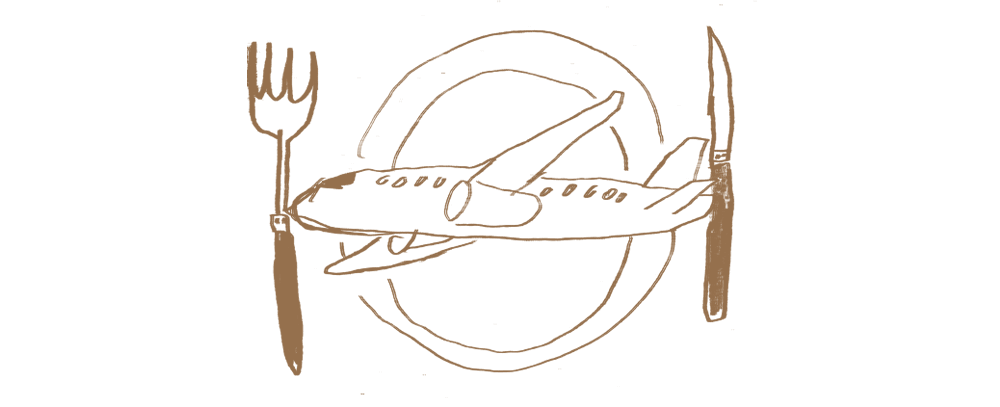
An excessive and distinct example of extreme eating obsessed me during my time of lurking pro-ana message boards. In the mid-’90s, my family owned at least three copies of the Guinness Book of World Records. This was because it was the ’90s, and also because we appeared in one of those books, as members of the “Longest Running Stage Magic Show - Same Theatre.” We did not go to church, but every Sunday we performed onstage, and this book validated our near-holy devotion. Our inclusion was a small point of pride for me, and it led me to a fascination with my neighbors in the forest of bizarre human achievement. The only one who has remained undimmed in my memory is a man who ate a plane, and then a grocery cart.
These are the sorts of stories that lodge themselves into a child’s brain like a shred of meat between molars. My parents couldn’t explain how he did it. Each Sunday at the show, my sibling and I disappeared in and out of boxes or levitated in a toy car. I was quite familiar with mysterious performances that seemed to defy the laws of physics, but this one stumped me. Whenever I thought of it, I pictured the snaking grocery carts in front of our local Stop & Shop. Even an adult with strong hands could not take one of those things down with a fork and knife. How could a piece of metal move through his belly without incident? Did he bring a saw to the table? The plane meal was even stranger. What parts did he begin with? What did it taste like? How did it come out his butt? I was a child who put ketchup on everything: plain pasta, pickles, boneless skinless chicken breast. If I had to eat a plane, I guessed I’d start with ketchup.
The plane-eater was Michel Lotito, aka Monsieur Mangetout. As a teenager he’d been diagnosed with pica, and discovered that he had a particularly sturdy stomach lining. Today I can watch a video on YouTube of a laddish T.V. host sitting next to Lotito at a white-clothed table. What I had always imagined as barbaric in fact looks quite delicate. Lotito holds a gold-rimmed ceramic cake plate in one hand and a fork in the other. On the plate are confetti-sized shavings of metal harvested from a Daewoo car. His hands are thick, but he still eats with the supple wrists of a proper Frenchman. I’d always pictured him gnawing; he chews delicately, and washes his meal down with a plain glass of water. “You’re a nutter, you are,” the host says, but Lotito barely looks at him except to explain that, yes, it tastes good. “Taking someone’s food off their plate, calling him names wtf,” one commenter writes. This is not a carnie performing for an audience, but a man allowing viewers into his private, sacred ritual. As he chomps, he stares off into the middle distance, settling into a narcotic peace. He has crossed that Rubicon that I never could, and lives in a world where he can look past food—delicious but ever laden with baggage—for gustatory pleasure. When I dream of a packing peanut melting on my tongue, this is the result I imagine: a trance-like state induced by oblivion.
Marian Bull is a writer, editor, and potter in Brooklyn. She is currently writing a memoir about growing up in a magic company.
NEXT ISSUE: Bloody Mary Chili Dogs. Read that again.
Update 8/4/2026: This post has been revised to reflect the new name of [Untitled Food Magazine].