

The Supply Chain Artisan
Welcome to Gourmet magazine, an independently owned digital food magazine that’s not affiliated with the Gourmet magazines of yore. Our Tuesday editions are where we feature great writing about food. Thursday is for recipes.
IN THIS ISSUE: Making the most of charcoal, not enough aluminum cans, and too much seaweed.
Appetizers
Programming Note
We’ve heard from many readers that our initials aren’t quite enough to figure out who’s who when it comes to these Appetizers. No one likes a mystery party platter, so we’ll be signing off with our first names from now on. —Alex, Amiel, Cale, Nozlee, and Sam, formerly known as A.T., A.B.S., C.G.W., N.S., and S.D.
One Man’s Sargassum
Every summer, giant mats of seaweed bloom across the Atlantic and wash up in rotting, foul-smelling drifts on beaches—warming oceans mean that this summer is shaping up to be a record season for the pelagic sargassum, with 13 million tons of the stuff already drifting towards our shores. A new paper in Food Hydrocolloids (what, you don’t subscribe?) from Florida State University professors proposes a possible use for the stuff, which typically just gets dumped in a landfill at great expense: even though the sargassum is too salty, too stringy, and too prone to picking up heavy metals for human consumption, it can be refined into an edible seaweed extract gel used in industrial food production (and by molecular gastronomists when they want to make tiny spheres of “chipotle mango caviar” etc.). —Sam
Coal Comfort
This Thursday will mark our very first grilling recipe! In preparation, I’ve spent a fair amount of time cooking outside, which gave me occasion to reflect on something that my friend and culinary mentor, Kieran, said to me many moons ago: “Man, charcoal isn’t free!” Sure, a bag of Kingsford isn’t exactly a splurge, but rarely are we so confronted with the direct fuel cost of a meal as when we fire up the Weber. Someday I will write 10,000 words on the impact that energy technology has had on home cooking throughout history (a four-hour braise hits different when you’re hand-gathering all the wood), but in the meantime I have a piece of thrifty advice from Kieran.
As soon as you finish cooking, cover the grill and make sure that the top and bottom air vents are tightly closed. By cutting off the supply of oxygen to the fire, whatever portion of each briquette that remains unconsumed will be available for your next grilling adventure. When you’re ready to cook again, you can just scoop them up into your chimney, shake it a bit to remove any ash, add fresh charcoal to fill, and proceed. I lit my grill for four short sessions last week, and in each instance was delighted to find that I had about a half chimney’s worth of perfectly usable charcoal leftover from the previous cook. It’s not like the savings are going to fund my IRA or anything, but there is nevertheless something spiritually satisfying about preventing dollars and cents from turning to ash. —Amiel
Can You Not?
If you were hoping to launch a beverage brand this or next year, good luck finding a can to sell it in. Americans seem to be guzzling all types of drinks, be they alcoholic, energy, or soft, and that’s leading to a can squeeze. “We are sold out for this year. We are more than 90 percent sold for next year, and we’re more than 50 percent sold for the balance of the decade,” said Ron Lewis, the chief executive at Ball, at an earnings call earlier this month. Ball is the largest can supplier in the world, representing about 40 percent of the global can market share (according to one market report estimate anyway).
But Ball’s not the only one reporting a shortage! The second-largest aluminum can manufacturer, Crown Holdings, has also sounded the alarm. CEO Timothy Donohue blamed “new product launches and convenient packaging” for the growth in demand on an earnings call last month, adding that there “should be a very tight can supply situation this summer.”
For whatever reason, can demand is up across beer giants like Anheuser-Busch, non-beer beverage juggernauts like Coca-Cola, and the increasing number of contenders like Celsius, Sanzo, La Croix, Olipop, et al. But one 2026-specific reason for the can constraint might be World Cup commemorative containers. “When I go into our plants and our factories around the world, be it in Europe, in South America, or in the U.S., at least one of the lines is running a World Cup label,” Ball CEO Lewis said. More like World (aluminum) Cup (shortage). —Cale

The Supply Chain Artisan
By Meghan McCarron
“Beans are just sitting there, ready to save everything.”
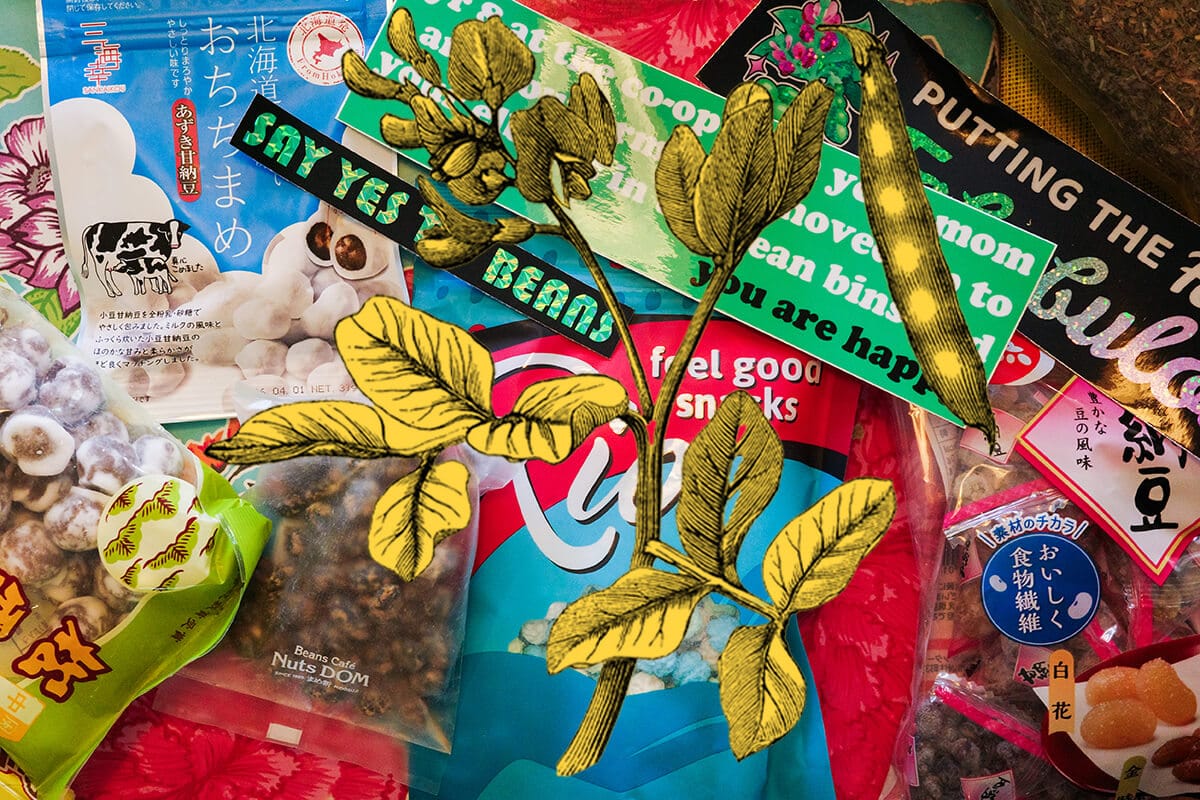
On a bright yellow tablecloth thrown over a kitchen table, Brian Russell, a Portland botanist, arrayed the riches of Fabaceae, the legume family. The bounty was shockingly diverse: There were bags of sugary Japanese bean snacks, a Mexican tamarind candy called Pulparindo, and a bowl of fried and crunchy favas. Next came little plates of carob powder and smoky mesquite, both the products of legume trees. Finally, he pulled out familiar foods that many wouldn’t recognize as legumes: a big baggie of dried alfalfa leaves, and another of pale, twisted licorice root. The display was crowned by a holographic sticker emblazoned with his motto: Say yes to beans.